

Collections at the Bell Museum
Back to About Bell Collections
The Bell Museum holds more than 1.2 million scientific specimens, representing every county in Minnesota, all seven continents, and myriad ecosystems worldwide. This collection is the basis for knowing the historical distribution of biodiversity in Minnesota and preserves a rich legacy of global biodiversity research by University faculty, staff and students. In addition, the Bell holds more than 1,500 artworks and historical artifacts, and a collection of materials used for public education programs.
Collections Acknowledgment
In aiming to document, preserve, and interpret biodiversity, the Bell Museum acknowledges the histories and cultures from where the specimens and items it holds originated. When using specimens to better understand the world’s biodiversity, we are obligated to uncover and document the entirety of the history of these collections. We are committed to creating an environment that welcomes and empowers people from historically underrepresented and marginalized communities to have equitable access to the museum’s resources. Informed by this self-reflection and commitment, we continue our work to better understand the natural world, remember the past, and create a more equitable future.

“We cannot change the past, but we can change our blindness to the past.”
-Chimamanda Ngozi Adichie
Learn more about the history of collections
What is a natural history museum?
A museum is an institution dedicated to preserving and often displaying culturally or scientifically significant objects, ranging from art to pressed plants and preserved animals. In 19th century Europe, natural history museums were created to house collections of biological, geological, anthropological, and other items from around the world, often collected in parallel with exploration and colonial expansion. Since museums developed in a colonial context, understanding the ways their past and present are entangled with that history is crucial to guiding their development now and into the future.
The Bell Museum
The Bell Museum was founded in 1872 by the state of Minnesota, as part of the legislation that established a state Geological and Natural History Survey. This survey was charged with collecting samples of the plants, animals, and rocks found here. At a time when Indigenous knowledge and ownership were largely disregarded, legislators sought to catalog and command what they regarded as their property and to benefit through using its resources.
The legislation also provided for a museum, housed at the University of Minnesota, “to collect, preserve, skillfully prepare, display, and interpret” the specimens collected in this survey, maintaining them at the University for scholarly research, teaching, and public enrichment. This museum began as a single room in the university’s then-only building, and grew to become an important resource for the region and worldwide. Today, the Bell Museum holds more than 1.2 million scientific specimens, representing every county in Minnesota and all seven continents. This collection is the basis for knowing the historical distribution of biodiversity in Minnesota and preserves a rich legacy of global biodiversity research by University faculty, staff and students. In addition, the Bell holds more than 1,500 artworks and historical artifacts, and a collection of hundreds of materials used for public education programs.
How were collections started and why was this problematic?
Humans are naturally driven to put things into categories by intuitively noting similarities and differences. Categories help us understand the natural world and give us language to describe what we see. We are also drawn to wonder at beautiful and odd-looking things. Museum collections often begin with these basic sentiments — a need to understand and accumulate interesting objects
Western scientists desiring to explore the world often traveled to far away places and brought home what they found interesting. These specimens and artifacts helped those who were unable to travel get a broader sense of the world. However, these acts to “take” and “discover” and “name” items typically ignored their natural context and dismissed knowledge held by native cultures.
Bringing specimens of living things from different places together in one place, however, does benefit science. All of the different forms of life are connected through shared evolutionary history. It’s only by comparing specimens from different areas can we begin to understand what species are, how they evolved, how they are related to others, and how they interact within ecosystems.
Natural history collections strive to organize biodiversity through taxonomy and classification. But since we can only view nature through our own eyes, these categories are often biased by human beliefs about which types of characteristics are more important and which are ‘better’ than others. The scientific names of thousands of species are littered with racial slurs and tributes to historically problematic figures (i.e., plant names and bird names). As scientists begin to recognize offensive or harmful names and terms, some are being changed. This is but one of many ways we can acknowledge and correct past wrongs to make science more inclusive.

Bird study room, early 1900s

Bell Museum Bird Collection Photo: Joe Szurszewski 2020, Bell Museum, University of Minnesota
The Bell Museum does not hold human remains or cultural artifacts. These are often part of anthropological collections, which are still reconciling many past injustices. Such collections were used in racist movements such as eugenics, which sought to rationalize multitudes of supposed “differences” between human “races.” Collections fueled “race science” that led to misconceptions about human races still promoted today despite overwhelming evidence of no biological basis for how we define them. Human remains were often taken without consent or permission from relatives and typically do not have sufficient documentation to enable respectful repatriation. Federal laws such as NAGPRA recognize tribal ownership of artifacts and ancestral remains and demand their return, yet another step toward reconciliation of colonial practice.
Most museums and collections are working to better acknowledge and share Indigenous knowledge and practices. Many accept orphaned collections, ones from institutions or people that are no longer able to maintain them. While we strive hard to ensure that all of our holdings are legally obtained, the social and political contexts of some specimens can still be problematic and nuanced. For instance, the Bell Museum’s Menage Collection includes many bird and mammal specimens from the Philippines collected in the 19th Century when it was under US control. The financing for this expedition was later revealed to have come from a real-estate scam in the Twin Cities that impacted the financial investments of hundreds of Americans. The scientists supported by this project were also political players who advocated for increasing America’s presence as a colonial power in the Philippines. Most of the specimens that were shipped back to the Bell Museum were taken without the consent of local communities. Many of these specimens are of rare species and many have gone locally extinct. We at the Bell Museum are working hard to recognize the need to find better ways to acknowledge such potentially problematic histories of collections while also acknowledging the value of specimens to promote knowledge of biodiversity, especially for informed conservation efforts in a rapidly changing world.
Why do we still have collections?

Despite a sometimes tumultuous past, collections still serve a vital purpose in scientific research. They offer a representation of the history of Earth’s organisms from various snapshots in time and space. Each specimen from a natural history collection was collected and contains data telling us when, where, and how that individual lived, along with information about the population, location, and time when it was alive. As curators and stewards of the collections, we are caretakers, ensuring the collections are broadly available for everyone interested in the natural world and documenting our history of attempting to understand the world where we live. While we can and should acknowledge the problematic histories associated with collections, it is crucial that we don’t downplay the usefulness of these specimens or erase their existence because of the actions of historical scientists. The specimens we currently have in natural history collections deserve to be used in future studies and not be “wasted.” Instead, most curators attempt to acknowledge the histories associated with their collections and strive to do better in the future.
Evolution takes place over thousands and millions of years, and we’ve really only just started our examination and collection of this information. Even the entirety of human history (and our collective natural history collections) are blips in the entire history of life on Earth. By maintaining and expanding our collections, we can begin to examine organisms’ evolutionary histories and investigate how things have changed over time.

Why do we still “add” to collections?
There is a question within the scientific community about “how many specimens is too many?,” which often stirs debates amongst museum researchers (i.e., a debate for and against collecting additional biological specimens). As scientists, we see the value in each specimen that shows a snapshot of time for that individual organism. Only a combination of many individuals can give us a comprehensive look at the species as a whole.
That said, we often restrict the number of specimens we collect for a various number of reasons: logistics, availability, rarity, population sizes, etc. We rarely capture organisms and turn them into specimens simply “because we can.” Instead we are purposeful in taking specimens “when needed,” and often for a specific project or for a collaboration. All of our research involves cooperation with state, federal, and international agencies (such as the DNR, USFWS, UN Convention on Biological Diversity, CITES, etc.), and their established environmental policies. Additionally, we have detailed protocols for our research and these are often examined by university ethics boards. This ensures the organisms we interact with are studied, caught, and euthanized appropriately., For example, biodiversity sampling for fishes involves capturing large numbers of fishes (multiple species) in a given location, but only a small subsample of those individuals may be euthanized and added into the collection.
Scientists (curators included) care about the life of the organisms and make it a point to not take more than deemed necessary. We aim to respect organismal life, while appreciating the scientific value of specimens. Newer, non-lethal sampling methods have allowed us to continue to gain information from organisms that are released (The Power of Poo, What is Environmental DNA?), while studies on existing specimens have also allowed us to appreciate what is already there. These methods include genetic resources, internal morphology information, and more (see the section below, “How have collections grown or changed over time?”). Additionally, grants such as the Salvage Wildlife grant aim to use organisms who have already met a tragic end (i.e., in a car accident or hit a window) for scientific purposes (click this link for example of a Burrowing Owl added to the Ornithology collection). Some research is simply not possible without collections, so we have developed new methods of capture and collection to avoid pain and suffering. We also work to share the information we gain from these specimens with other scientists and the general public. Databases (like the Minnesota Biodiversity Atlas) allow us to share distribution data worldwide.
Who uses collections?
Many scientists use collections! Natural history museums are comprised of a vast network of people all over the world, sharing expertise and organisms to assist with data collection and scientific research. The people who work with us at the Bell Museum often have research projects specifically designed to use the specimens located within our collection (i.e., papillated redbait fish, dragonfish, olinguito species).
Other people from the scientific community visit the collections or obtain loans to study the specimens in their home institutions. We also have visitors who are artists or members of Indigenous communities who hope to learn more about our work, the specimens we have, and share their knowledge with us. The public-facing side of the Bell Museum also uses scientific collections for education and outreach, bringing the “hidden” collections into the light for the general public to appreciate. For example, the Tree of Life gallery in the Bell Museum showcases specimens from the Bell’s scientific collection, both from Minnesota and beyond.
How have collections grown or changed over time?
Both the procedures and practices associated with collecting and the nature of scientific collections themselves have changed tremendously over the past century or more. Importantly, scientists are acutely aware of the extractive history of collections, and focus on rectifying this history in their contemporary practice. Curators often build collaborations with scientists in the countries where their study organisms occur, work to build and support collections there as well as at their home institutions, and advise students from those countries. We often work with local communities to share knowledge about biodiversity.
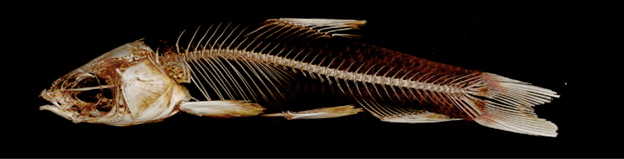
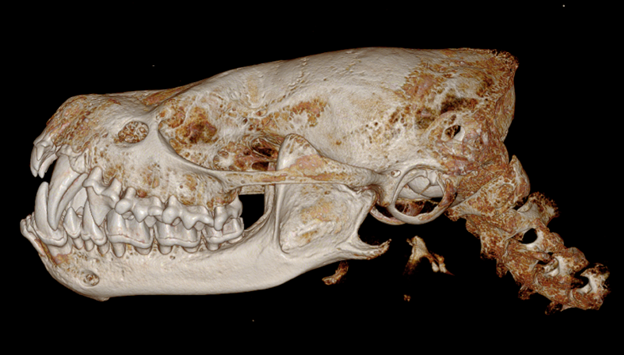
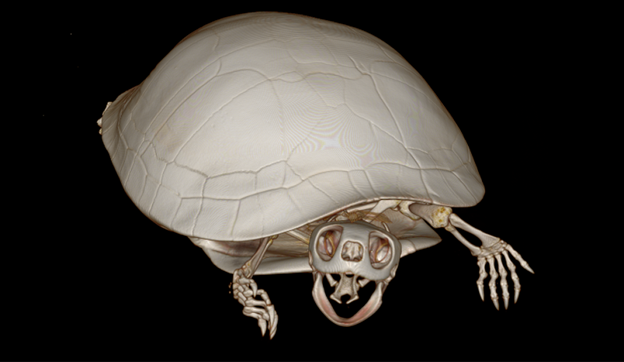
The nature of collections have changed as well. For instance, in the early days of scientific collecting, study skins of birds and mammals were the standard, only preserving the skin and fur along with a few bones in the limbs and skull. As the limitations of these preparations for studying biology were understood, more of the specimens (e.g., skeletons, stomach contents) were preserved, and new types of preservation (e.g., formalin-fixed specimens, frozen tissues) were prioritized. In many cases, scientists had little conception of how the information they were preserving might be used in the future – for instance, the structure of DNA was not known until 1953, but we can now sequence the entire genome of a specimen collected in the 1800s with just a small piece of tissue. Similarly, formalin-preserved specimens (affectionately known as “pickles”) can now be scanned using X-rays down to the micrometer scale (a human hair is 75 micrometers), revealing details of bones, musculature, organs, and even parasites without dissecting the specimen and affecting its use in future studies. We can even detect aspects of the diet and geographic origin of a specimen using the ratio of atomic isotopes. By preserving as much of each specimen as we can now, who knows what future studies may be possible?

Keith Barker, Curator of Genetic Resources Photo Credit: Joe Szurszewski 2020, Bell Museum, University of Minnesota

Salvage Wildlife Specimen.