

Bugs: Outside the Box Media Release
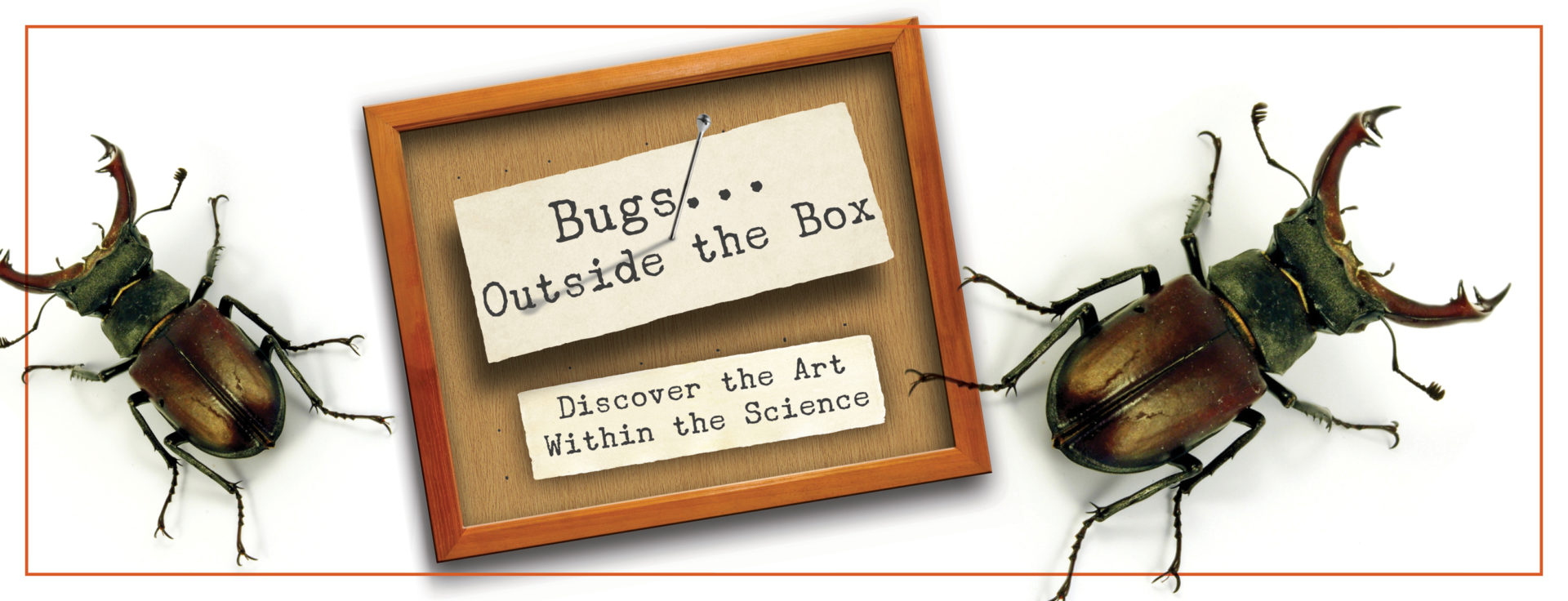
A long-arm beetle more than ten feet tall, a giant butterfly with a five foot wingspan, and heavily-armored stag beetles with jaws as big as your leg await you in this fascinating look at the insect world.
Four Foot Beetles, Giant Butterflies and More Help Bell Museum Visitors Discover the Art Within the Science
CONTACTS Bell Museum, Adrienne Wiseman, awiseman@umn.edu, 612.624.0794 and Nehwoen Luogon-Bojkov, luogo001@umn.edu
WHEN On view at the Bell Museum from June 11 to September 12
TICKETS
Guests will need to make advance timed reservations/ticket purchases online at https://www.bellmuseum.umn.edu/admissions. The Bugs Outside the Box exhibition is included with general Bell admission.
IMAGES: A selection of images can be found here, more available as needed
BELL MUSEUM, UNIVERSITY OF MINNESOTA – Where can you see a butterfly with a five foot wingspan, or a longhorn beetle with antennae more than twelve feet across? The answers can be found amongst the enormous sculptures on display in Bugs: Outside the Box, at the Bell Museum this summer, June 11 to Sept 12, 2021.
Scientifically exact, with a keen attention to detail, the exhibit features a virtual army of giant bugs with one aim in mind – educating the public by shining a light on museum collections and insect taxonomy.
Among the highlights of the exhibit is a rarely seen long-arm beetle more than ten feet in height, a collection of heavily armored stag beetles with impressive jaws and horns as long as your arm, and insight into the amazing intricacy of each insect on display. Alongside these impressive works of art is the insect in question represented at life size, and detailed information on the life habits, location, and other facts unique to each insect and its family.
Additional topics include an introduction to museum taxonomy and collections, with an interactive “Build A Bug” game which allows visitors to create their own bugs from bug parts and place them in groups based on shared characteristics, and additional interactive experiences such as the “Touch Zone,” where enlarged insect body parts matching those on display and made of the same materials will be available for touching.
To further highlight insect collections in museums, photo murals featuring the interiors of typical museum collecting drawers, greatly enlarged, line the gallery walls and serve as an effective backdrop.
About The Artist
The methods used to create the sculptures are almost as fascinating as the sculptures themselves. Lorenzo Possenti is the scientific artist who creates these exacting works of art. Using powerful magnification and actual specimens, Lorenzo painstakingly creates each sculpture with remarkable accuracy. Based in Pisa, Italy, Lorenzo collaborated with Twin Cities-based company Outhouse Exhibit Services to bring his works to the United States.
The methods used to create the sculptures are almost as fascinating as the sculptures themselves. Lorenzo Possenti is the scientific artist who creates these exacting works of art. Using powerful magnification and actual specimens, Lorenzo painstakingly creates each sculpture with remarkable accuracy. Based in Pisa, Italy, Lorenzo collaborated with Twin Cities-based company Outhouse Exhibit Services to bring his works to the United States.
Additional Activities and Programs
Get inspired and get outside! Use your observation skills and learn about the insects you can find on our Learning Landscape and in your own neighborhood. Activities developed in collaboration with researchers and students at the University of Minnesota, and with community partners, help with insect observation, focusing on Minnesota species!
Visit the Dr. Roger E. Anderson Education Wing display to see specimens from the University of Minnesota’s Insect Museum, learn about collecting tools, and watch the Bell’s representative collection of specimens from our Learning Landscape grow over the summer.
Don’t miss out on the Bell’s family-friendly virtual program with the Bug Chicks, our adult-friendly virtual Bell Bug Trivia night, and workshops exploring topics such as planting for pollinators, eco-friendly management of garden pests, and more!
