

Bell Field Notes Project
See art and science combine in a special collaboration
Published10/17/2018
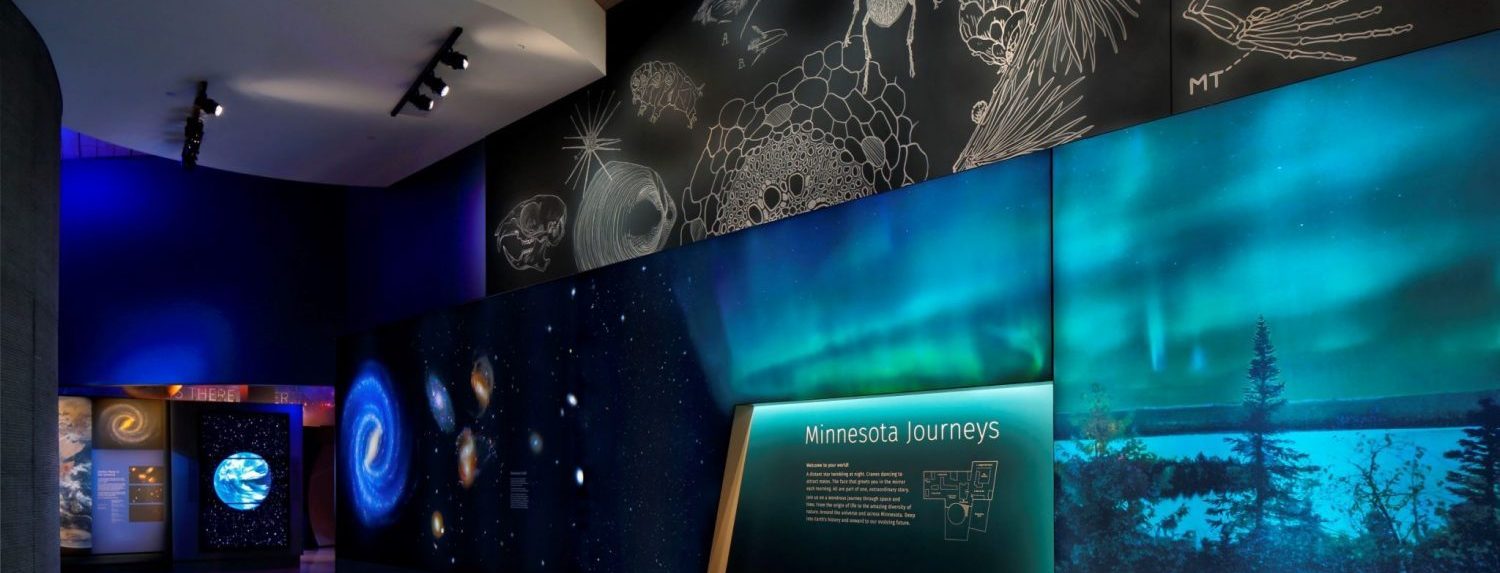
As you work your way through the new Bell Museum, you may spot what looks like chalk drawings of creatures and concepts high up on the wall. Those represent “field notes”—a way that scientists, artists and others record observations. By making notes, collecting specimens, and seeking evidence, we are able to make connections among elements of the natural world.
Watch the video below to see how Minneapolis artist Adam Dennis brought sketches from real scientific field notes and studies to life at the new museum (in addition to an exceptional mural of his own design near our main entrance). Dennis’ career was inspired by Minnesota’s rich legacy of wildlife artistry and his experience of drawing, observing, and experiencing the natural world growing up in Mound, Minnesota.
His work explores humanity and nature—recognizing that we are not separate entities, but one and the same—just as the museum explores the undeniable bond between art and science.
Video: Eve Daniels
Art: Adam Dennis, et al.
Many of the paintings included in the Field Notes project were inspired by actual field notes from Bell-affiliated artists and naturalists. Check out a few of the original sketches that inspired the artwork on walls throughout the Bell.

Move bar to see the original sketch from Don notes compared with Adam's artwork on the walls of the Bell Museum. Turn device to landscape orientation to view Adam's artistic rendering of Don's original sketch.
Northern Pike Skull After Don Luce
Don Luce writes: “For two summers I worked at the Archeological Research Station at Kampsville, Illinois. Located between the Mississippi and Illinois Rivers, the region is rich in ancient Native American village and burial sites. I worked for an archeologist who was preparing an identification guide to faunal remains from village garbage pits. The pits contained lots of fish bones and the distinctively shaped skull bones made it possible to identify most to species, telling us a lot about the people’s diet, and sometimes when and where they fished. These drawings of articulated skulls may be more attractive, but my real work was to make carefully measured drawings of each of the dozen or so of individual bones that make up a single skull.”
This graphic shows the appearance of the northern pike skull sketch in the original field notes and in Adam's interpretation on the Bell Museum wall.

Black Ducks Landing, Francis Lee Jaques, pencil sketch, n.d. Jaques was especially interested in waterfowl and was a master at depicting them in flight. His mastery was based on intensive observation of birds in the field and numerous carefully drawn sketches. Swipe to see the artistic rendering on Bell Museum walls.

Black Ducks Landing after Francis Lee Jaques, pencil sketch, n.d. Jaques was especially interested in waterfowl and was a master at depicting them in flight. His mastery was based on intensive observation of birds in the field and numerous carefully drawn sketches. Swipe to see the original field notes.

Walter Breckenridge, pen and ink, c. 1932. As a relatively new preparator at the Bell Museum of Natural History, Walter Breckenridge was assigned to do all the more technical illustrations for the book Birds of Minnesota written by museum director T. S. Roberts. Swipe image to see artistic rendering on Bell Museum walls.

Walter Breckenridge, pen and ink, c. 1932. As a relatively new preparator at the Bell Museum of Natural History, Walter Breckenridge was assigned to do all the more technical illustrations for the book Birds of Minnesota written by museum director T. S. Roberts. Swipe image to see original field notes.
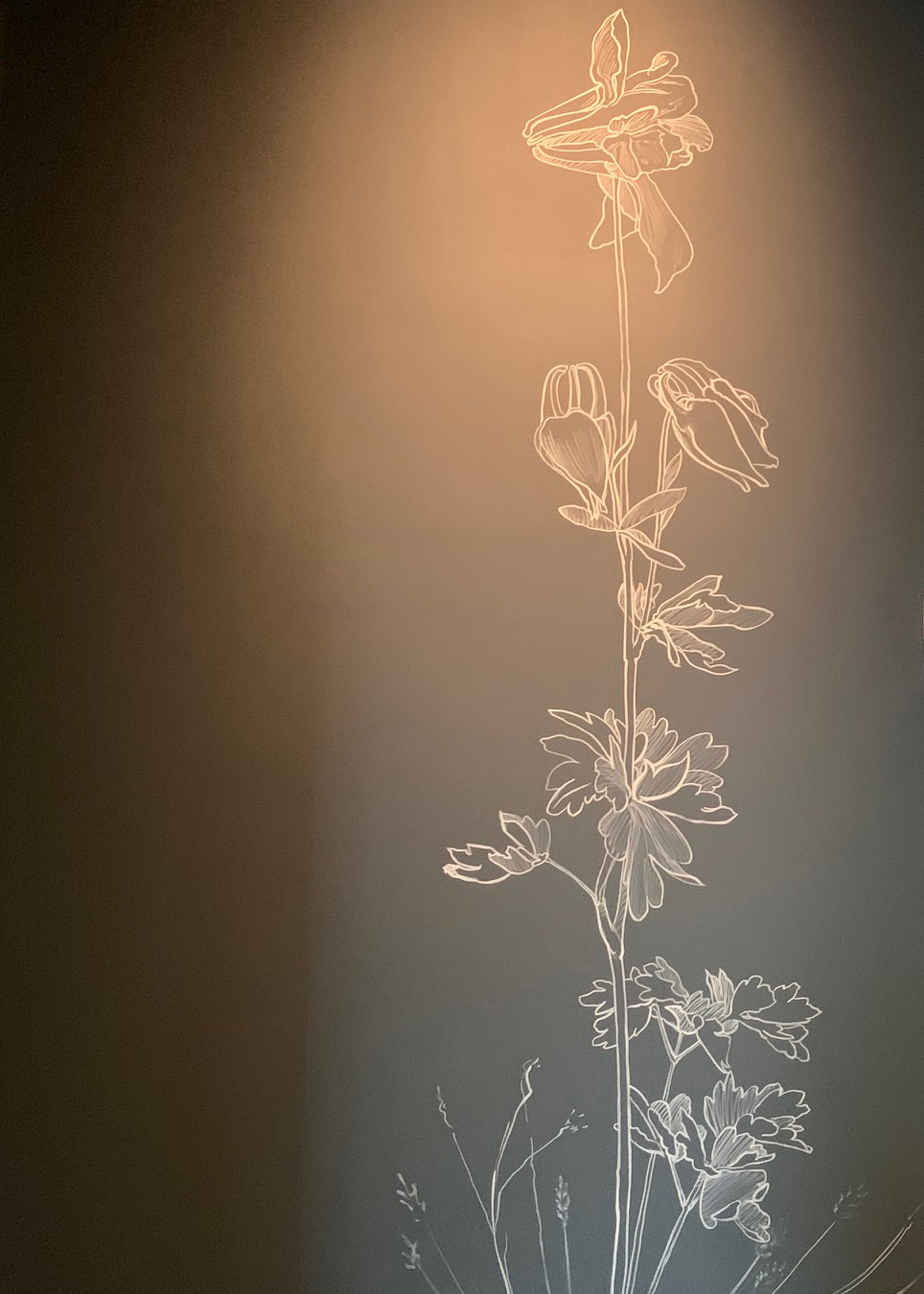
Move bar to see the original sketch from Jaques' notes compared with Adam's artwork on the walls of the Bell Museum. Turn device to landscape orientation to view Adam's artistic rendering of Jaques' original sketch.
Alpine Columbine after Francis Lee Jaques
Alpine Columbine, Francis Lee Jaques, pencil sketch, c. 1935 (orig. pencil sketch) Jaques was sent to the Alps to gather material for a diorama at the American Museum of Natural History in New York City. He made sketches and paintings as reference for the background panorama, and also sketched plants, trees, birds, rocks and other subjects needed to fully describe the environment being represented. These drawings were done before accurate color film was available and the sketches include detailed notes on color.
This graphic shows the appearance of the alpine columbine sketch in the original field notes and in Adam's interpretation on the Bell Museum wall.