

Specimen Spotlight: The Great Indian Hornbill
Published07/10/2024 , by Emily Dzieweczynski
Recently, the Bell added a unique specimen with a storied past to the collections. Curatorial Research Associate, Sam Getty, discovered an old Great Indian Hornbill in the Bell’s lab freezer. This was a bit of an unusual find, given hornbills are only found in the tropics of Asia and Africa.
It turns out, this bird came with a history and a name: Max. Max was one of the first residents of the Minnesota Zoo, joining them in 1977. Additionally, he was likely the longest-lived Great Hornbill on record—he lived to the age of 42. This surpasses the average age of hornbills by 16 years!

After Max passed away, the Minnesota Zoo donated his carcass to the Bell Museum. While it can be sad when a beloved creature like Max passes away, adding him to the Bell Museum’s collections means that his legacy can live on and lead to new scientific discoveries. This is one of the reasons why connections between zoos and natural history museums can be beneficial for preserving biodiversity.
Additionally, zoos can be helpful to natural history museums as they can help document species we may not otherwise have access to. For example, the Great Indian Hornbills are a protected species, which means we cannot collect them in the wild. Contributing the Minnesota Zoo’s deceased species to the Bell’s collections helps us expand and document diversity.
During the preparation of Max, Getty’s goal was to make the rare specimen as useful as possible for current and future research. Together with Curator of Ornithology Sushma Reddy, they were able to make different preparations to help scientists who are interested in different bird features. For example, they made a stuffed skin and spread wing to highlight plumage, a skeleton to preserve bones and the complete skull, and tissue samples for genetic analyses.

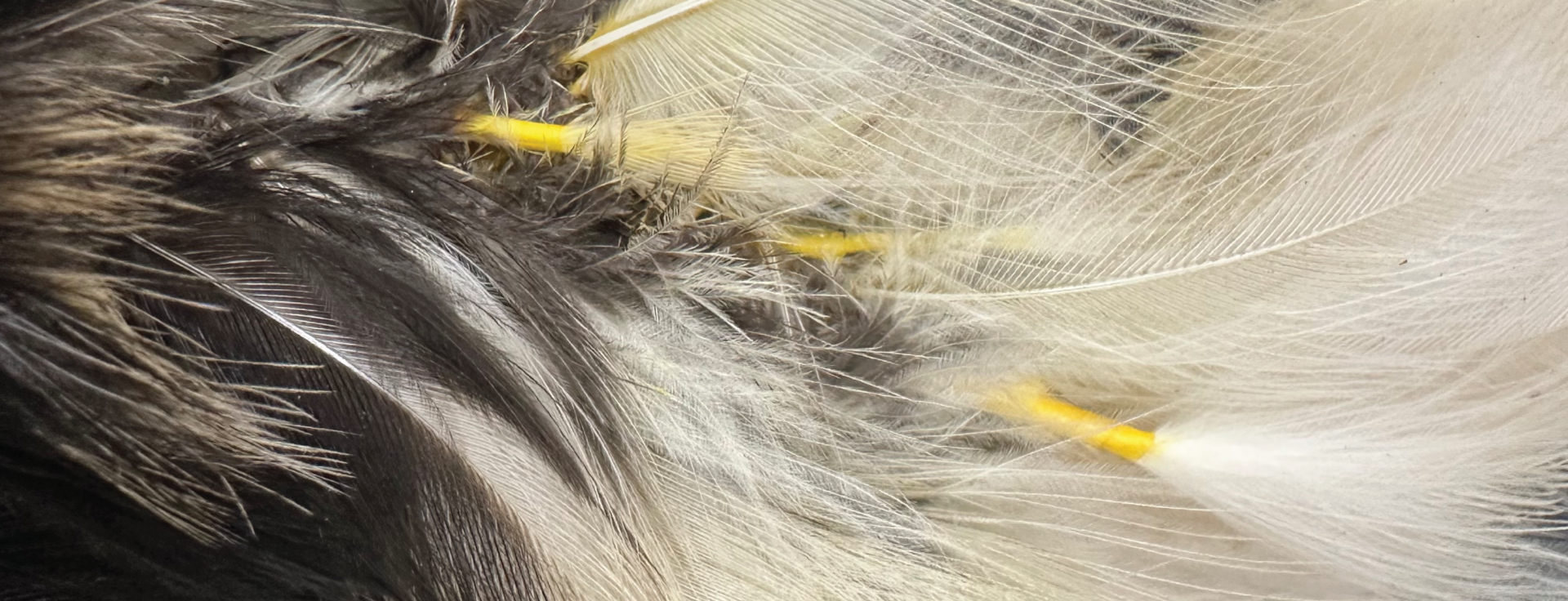
They noticed some unusual things about Max as they prepared his carcass for archiving. Max was in the midst of molting. Several wing and body feathers were new incoming feathers—an unusual feature that was exciting to document on such a rare species. Reddy and Getty reported that they were surprised by the texture of his body feathers as they felt more like coarse fur rather than feathers and were more sparse than expected. With so many of his feathers growing in, it was a fun opportunity to see feathers in all stages of growth. 
Reddy reached out to collaborator Dr. Anand Krishnan in India who is interested in hornbills. Krishnan was very excited to hear about this specimen, as he has been looking for a spread wing and complete skull in museums but has had no luck. Additionally, Krishnan was interested in having a 3D scan of the skull. Krishnan shared a bit about his research,
“My lab is interested in how form influences function, particularly in sound-producing structures or those that undergo mechanical stresses. We have been studying variations in wing sounds produced by large hornbills as they fly, and are interested in using wing morphology to understand how these sounds are produced and vary. With 3D scans, we can perform mechanical and computational simulations to understand the flows over the wing, and the sounds that might be produced by them.”
Currently, there isn’t a 3D model of this species available to researchers. Reddy and Getty hope to contribute towards this goal and continue to maximize the information we can share about this amazing specimen. This achievement will be made possible in part because of the generosity of David B. Donsker. His philanthropic investment was used to recently purchase the handheld 3D scanner which will make the creation of these scans possible.
By carefully and thoughtfully preserving Max, his legacy is now able to live on and impact research across the world. Using new technology like 3D scanning makes this even more accessible. We’re excited to have Max’s legacy live on in the Bell’s collections.