

The Serendipity of Datasets
Learn about Bell Museum Associate and professor Earth Sciences David Fox’s recent study published in the journal Science
Published12/05/2022 , by Emily Dzieweczynski
Recently, Bell Museum Associate and professor of Earth Sciences at the University of Minnesota David Fox co-authored a study published in the journal Science on the ancient evolution of mammal skulls. Not only does this study have significant scientific value, it also demonstrates how natural history specimens collected hundreds of years ago can be studied with new technology to discover things about our past.

Fox’s involvement in the project started in a bit of a roundabout way. While collecting data for another project on 3D tooth morphology, Fox thought it might be beneficial to collect more data than necessary. “When it comes to data, I tend to be greedy—you never know what the data might be useful for” Fox stated. So while Fox could have just collected data about teeth, he and his students instead collected data about the whole skull.
Thus, Fox’s lab started to produce lab-generated CT scans of North American rodent skulls. They started with Bell Museum specimens. The team worked through the North American species of rodents in the Bell’s collections before they started borrowing specimens from other museums, particularly the Smithsonian. When all was said and done, they ended up with a sample of about 150 CT scans of North American rodent skulls.
While the image of the scientist working away tirelessly and lonesomely in the lab is sometimes the truth, science is a highly collaborative effort. As it turns out, the data Fox’s lab was collecting would be invaluable to another research project happening across the country. As Fox presented the findings about 3D tooth morphology at conferences over the years, other researchers became interested in the work. Ultimately, a close friend of Fox’s, Anjali Goswami, reached out to utilize the dataset and include Fox in the study that is now published in Science. “That’s part of the fun in science—you don’t know where one project will take you and it might mean circling back with old friends,” Fox shared.
In the study published in Science, the researchers are looking at cranial morphology using CT scans of skulls. Utilizing CT scans in natural history research is becoming more and more prevalent. CT scanning is a method of constructing 3D models of objects by compositing 100 to 1000 x-rays at slightly different orientations. These x-rays create a holistic and detailed rendition of the object or specimen. From that, researchers can extract specific coordinates that serve as points of reference for comparison. Fox refers to these coordinates as, “a constellation of landmarks.” These constellations or coordinates then became useful for characterizing a skull and can be compared as averages across different skulls to see the rates of change across time.
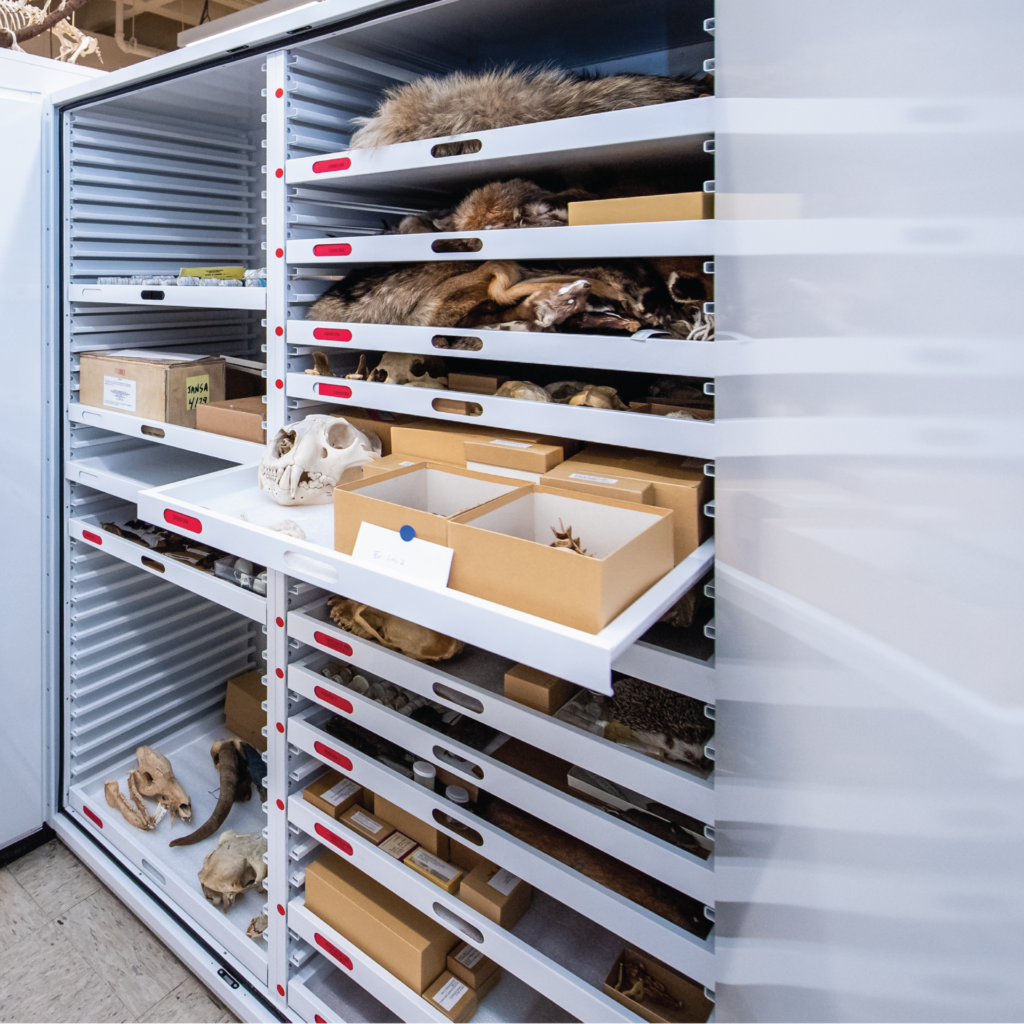
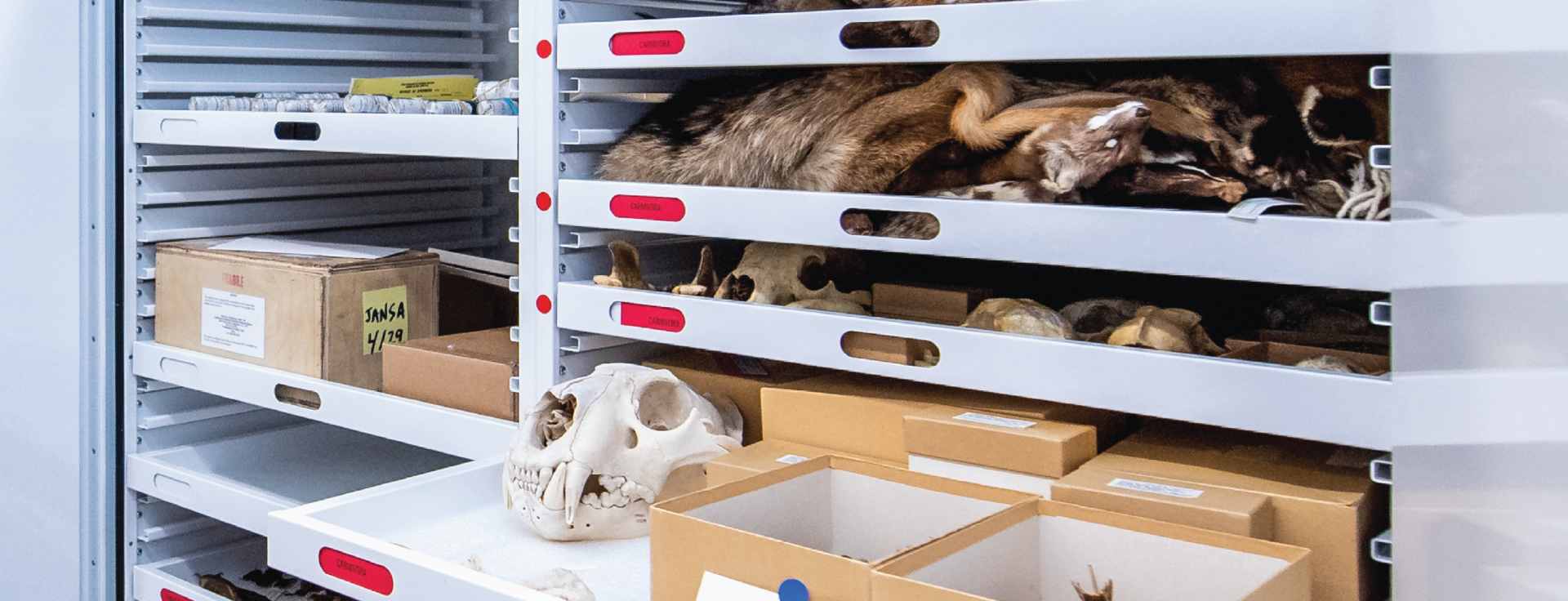
A hundred years ago when these rodent skulls were being collected, we had no idea that one day we would be shooting x-rays through them to create hyper-realistic 3D models—and that is the value of collecting for the future. We never know what these collections will teach us in the future or what they can be used for. It becomes much more than documenting biodiversity—scientists continue to use collections to unravel the fundamental aspects of the world around us. As technology advances, often too does our understanding.
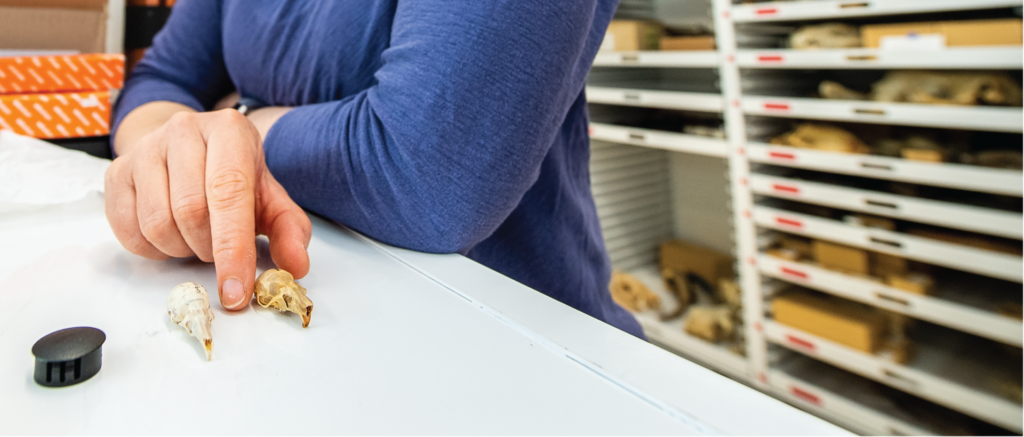
As Fox explained, there has been a growing scientific effort around trying to understand the large-scale patterns in morphology, and this paper is the most comprehensive view taxonomically for mammal skulls. One of the main findings was that there is a declining rate of evolutionary change in skull morphology. While the impact of the paper published in Science remains to be seen, it certainly speaks to the value of collaboration in science and the necessity of collecting for the future.